Your heels are up. Your fingertips are on the barre. You’ve found your balance, and then your coach asks you to move your free arm. Suddenly, the foot that felt steady a second ago has a lot to say.
That’s a small moment with a lot going on. In Ballet Barre at CRUSH Studios in Haarlem, a heel raise can become a lesson in where you put your weight, how you use the barre and what happens when you add one more thing to a movement you thought you had down.
On the way up, find your feet
A heel raise starts with the most ordinary action in the room: taking your heels off the floor. As you rise, the area you’re balancing on gets smaller. Your calves are working, and you may feel your weight move towards the big toe or the outside edge of your foot.
In class, try paying attention to where that pressure goes. See whether you can lift to a height where you feel steady across the balls of your feet. A lower rise gives you room to notice those details, especially once the music is going and the reps start to add up.
At the top, notice what your hand is doing
A hand on the barre gives you a reference point. On one rep, you might realise you’re leaning into it. On the next, you might feel balanced enough to soften your grip. Both tell you something about how you’re holding the position.
Then comes the arm cue. Moving your free arm changes where you feel your weight while your feet are still in the same place. If that throws off your balance, keep the arm closer or take the next repetition with your free hand at your side. You can add the arm back when you’ve found the rhythm.
On the way down, give the heels a count of their own
It’s tempting to let your heels drop as soon as the hold is over. Try listening for the count on the way down and letting your heels arrive together. Once the movement starts to feel familiar, the descent is a good place to notice whether you’re still in control as your calves tire.
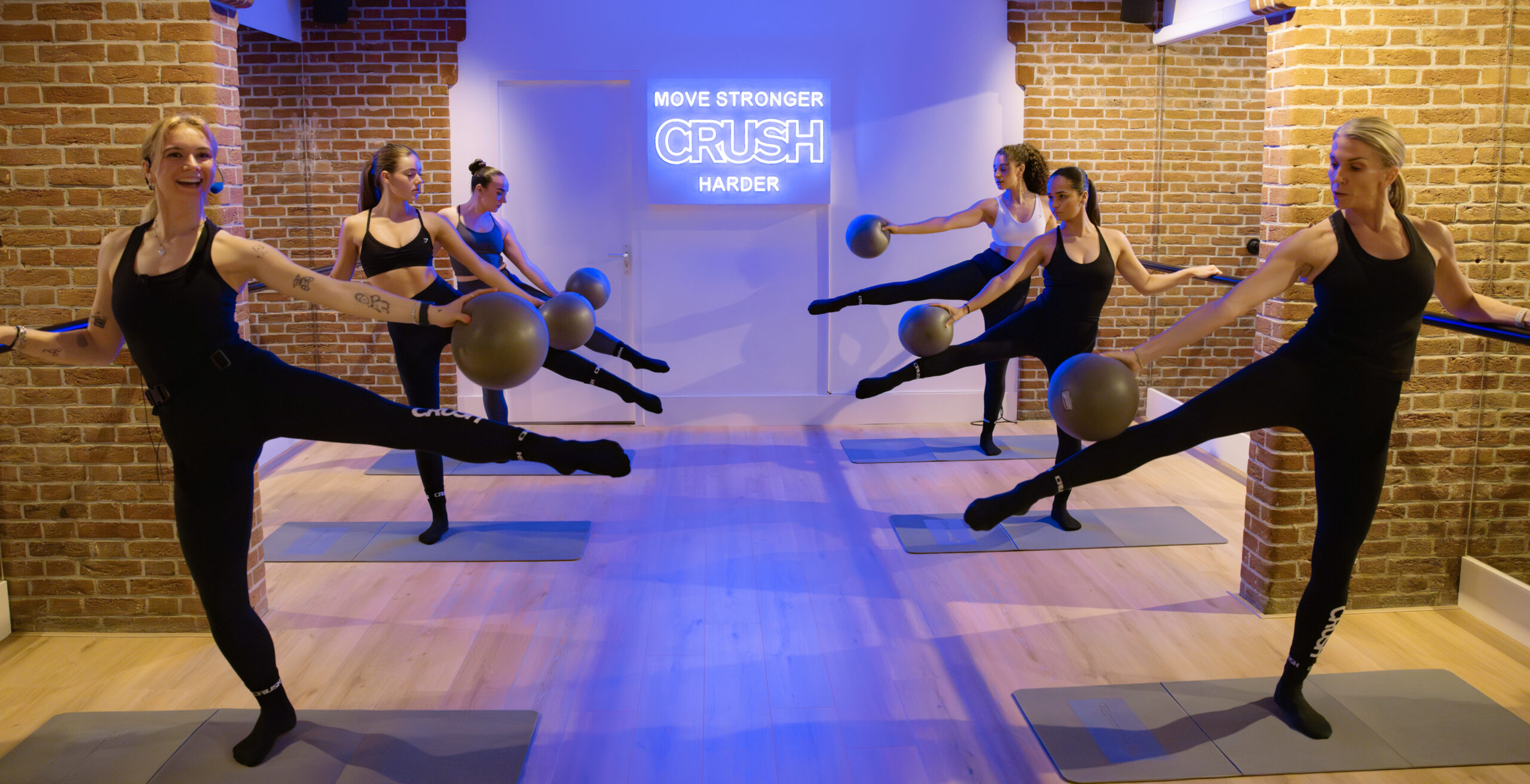
You can bring that same attention to a plié or to a leg reaching away from the barre. Pick one part of the movement to follow for a few reps. Feel where your weight goes. Then see what changes when you add the arms or change the tempo.
Take one cue into class
For your first Ballet Barre session, try this: notice how lightly you can hold the barre and still feel steady. Ask your coach for a comfortable foot position and start with a heel lift you can lower smoothly. Ballet experience is optional. A little curiosity about how you move is plenty.
Planning your first visit? Read our first barre class guide for the practical details, then find Ballet Barre on the CRUSH schedule.