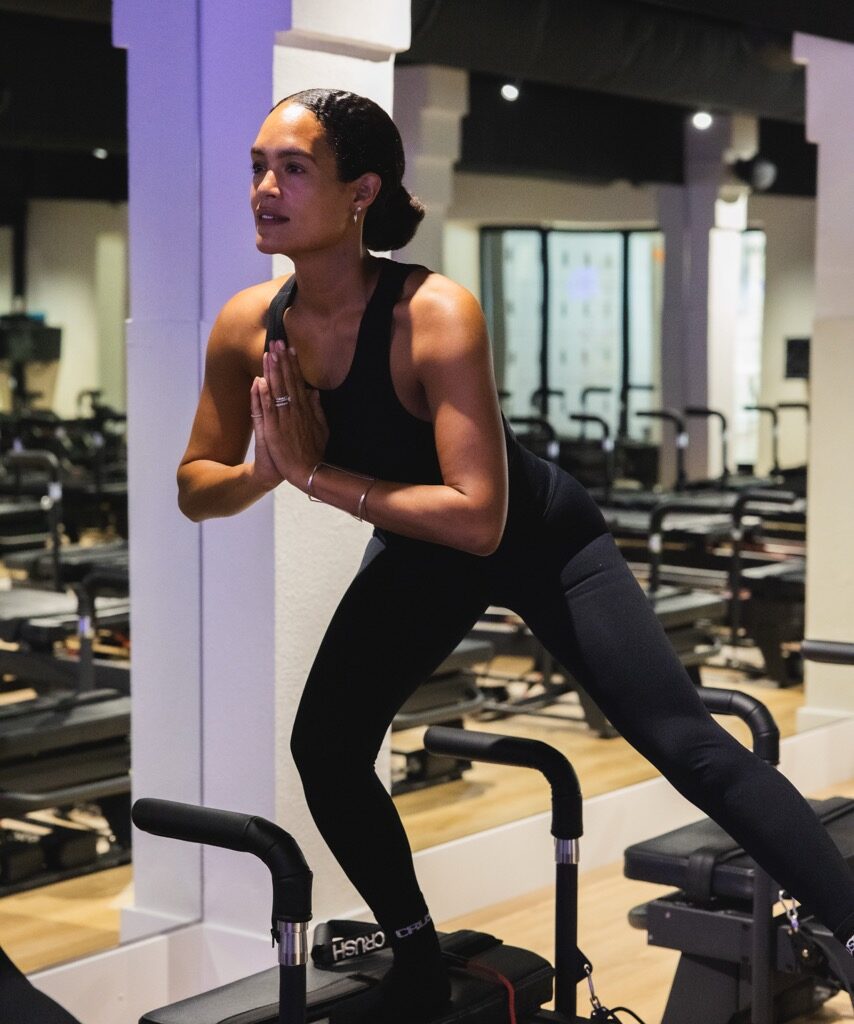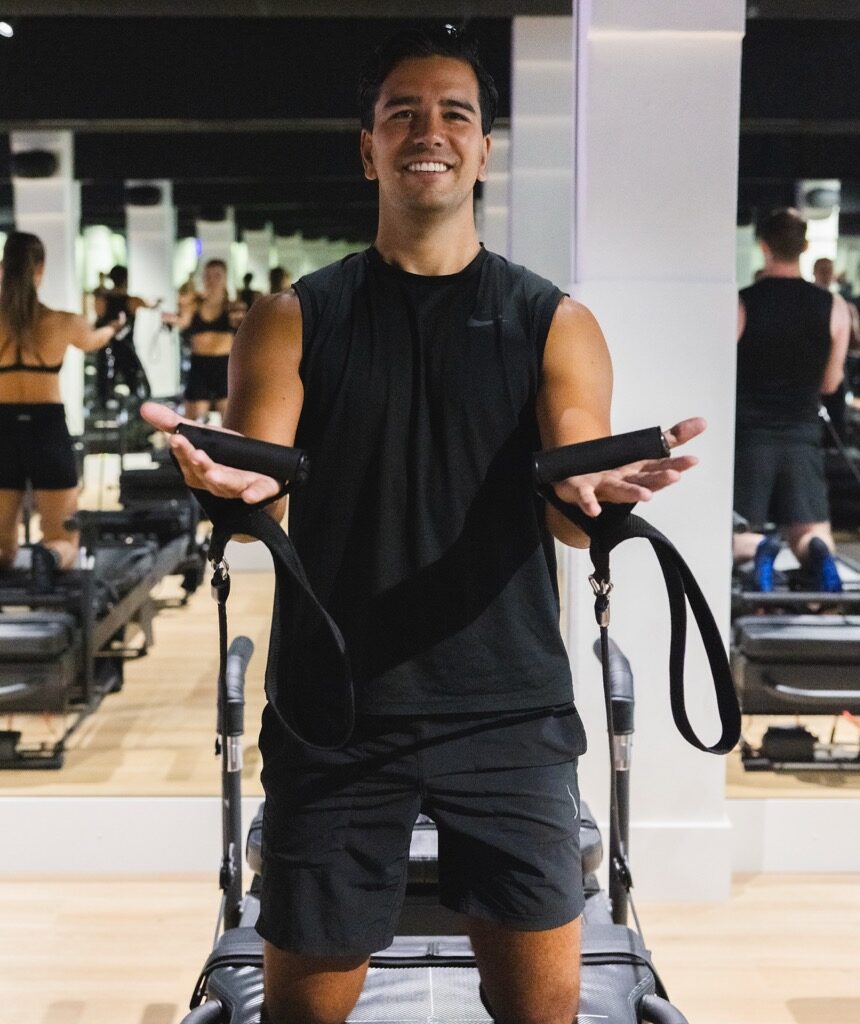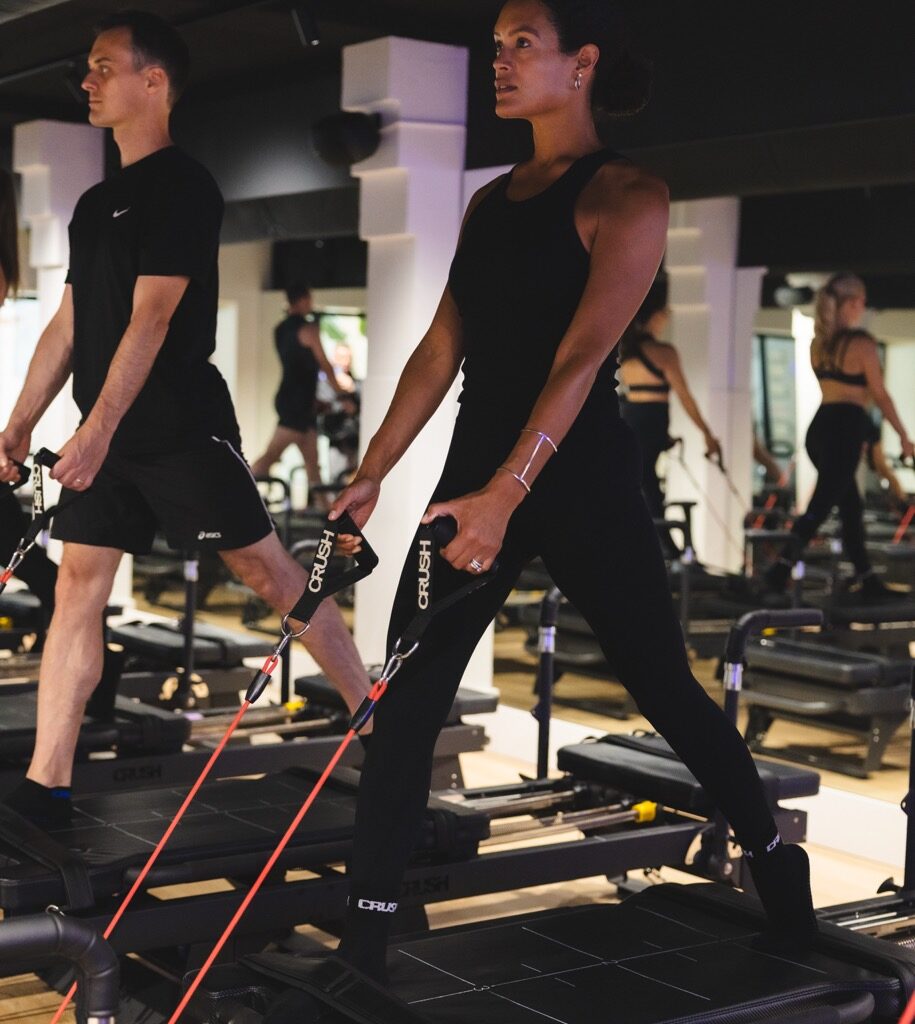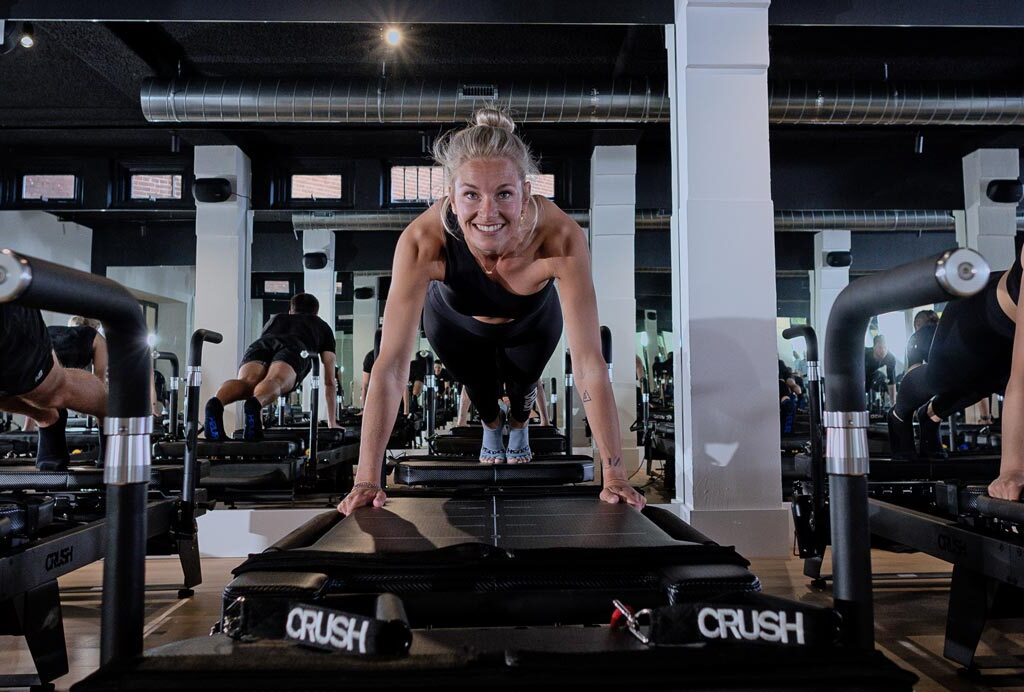
What to Expect from Your First Barre Class

What to Expect from Your First Barre Class

What to Expect from Your First Barre Class

Your first barre class can feel a little mysterious from the outside. Is it pilates? Is it dance? Do you need rhythm, flexibility or a background in ballet? Short answer: no. At CRUSH Barre, you just need to show up, follow your instructor and be ready for small moves that bring a serious burn.

Barre is low-impact, high-intensity and full-body. You move with control, work deep into your muscles and build strength through repetition, holds and precise alignment. It looks calm. It feels spicy.

What is barre?

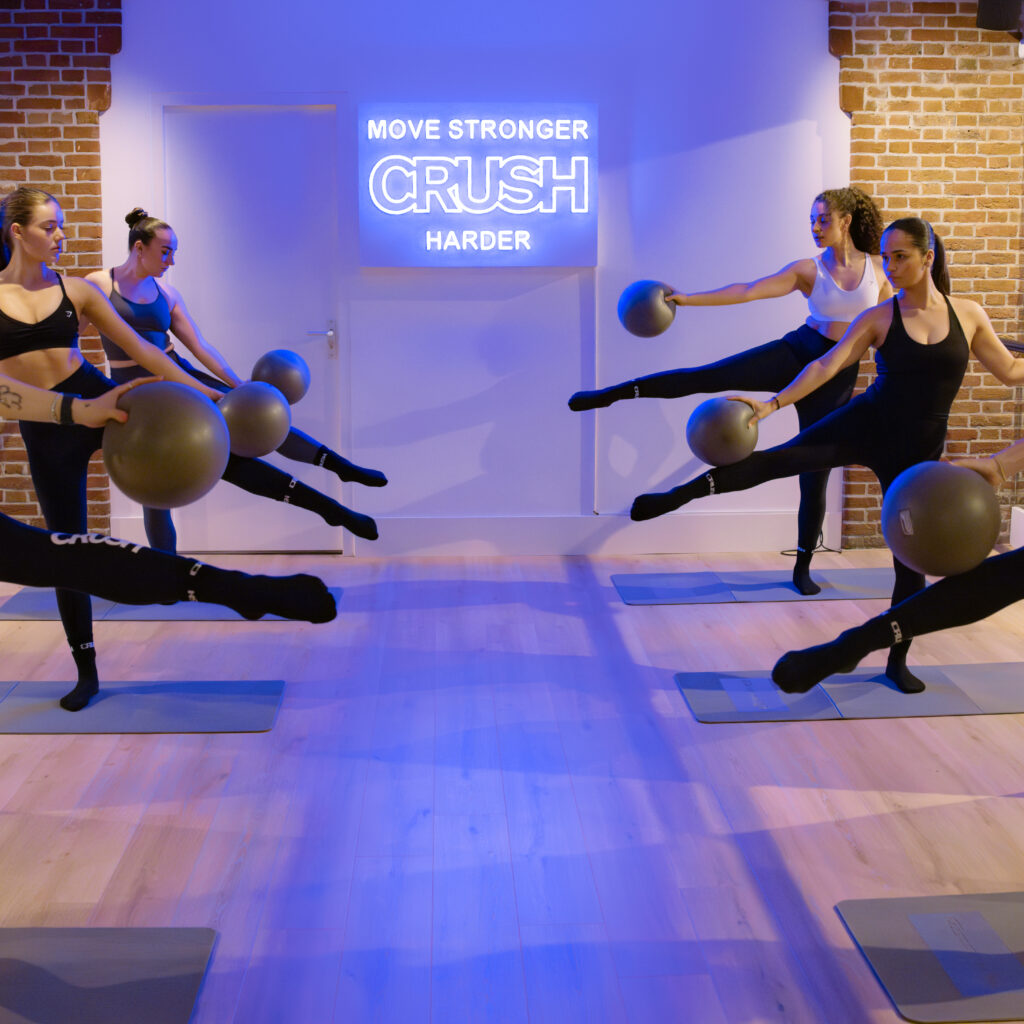
Barre blends pilates-inspired control, functional strength and dance-inspired movement. You may work standing at the barre, on the mat or with light props, moving through sequences that target your legs, glutes, core, arms and posture muscles.

You do not need dance experience. You do not need to be flexible. You do not need to know the exercises before you arrive. Your instructor guides you through the class step by step, with options so you can move at your own pace.

Before class: what should you bring?

Keep it simple. Wear something you can move in, bring water and arrive a little early so you can settle into the studio. Grip socks are usually a smart choice for barre because they help you feel stable during standing work, holds and controlled transitions.

If it is your first time at CRUSH, check the schedule before you book and choose a class that fits your day. You can also explore the full CRUSH classes overview if you are still deciding between barre, reformer or another session.

What happens during your first barre class?

Expect a warm-up, focused strength sequences and plenty of controlled repetition. The movements are often small: pulses, lifts, holds, squeezes and slow transitions. Small does not mean easy. In barre, the challenge comes from precision, time under tension and staying with the movement when your muscles start to shake.

You will probably feel your legs and glutes working first. Then your core switches on. Your posture muscles wake up. Your arms join the party. By the end, your whole body has been asked to focus.

Will I be able to keep up?

Yes. Your first barre class is not about being perfect. It is about learning the rhythm of the class, listening to the cues and finding the version of each movement that works for your body.

Barre is beginner-friendly, but it is not soft. You can expect to feel challenged. If your muscles shake, that does not mean you are doing it wrong. It usually means the right muscles are working. Take the option, reset when you need to and keep moving with control.

How does barre feel?

Barre feels precise, focused and energising. There is no jumping and no heavy gym-floor chaos, but the intensity builds quickly. You might feel a deep burn in your thighs, glutes, calves or core. You might also notice how much concentration it takes to keep your posture strong and your movements controlled.

That is part of the magic. Barre trains strength, balance, coordination and body awareness at the same time. If you want to understand more about this training style, read our guide to low-impact, high-intensity training.

Barre vs reformer pilates: what is the difference?

Both barre and reformer pilates build strength, control and deep muscle activation. Barre uses more standing work, rhythm and repetition. Reformer pilates uses spring-loaded resistance on the reformer machine to challenge your body in a different way.

If you are not sure which one suits you best, read Reformer Pilates vs Barre: which class suits you? The best answer may be both: barre for rhythm and burn, reformer for resistance and deep control.

What will you feel after class?

After your first barre class, you may feel taller, warmer and more aware of your body. Your legs might feel worked. Your core might feel switched on. Your posture may feel more lifted. The next day, you may discover muscles you forgot you had.

That is normal. Barre works deep stabilising muscles through controlled movement, so the effort can stay with you after class. Drink water, move gently and give your body time to adapt.

Tips for your first barre class

  • Arrive a little early so you can get comfortable in the studio.
  • Choose control over speed.
  • Listen to the instructor’s cues, especially for posture and alignment.
  • Take options when you need them.
  • Do not panic when your muscles shake. That is part of the work.
  • Book your next class while the feeling is still fresh.

Ready for your first barre class?

Your first barre class is your chance to experience low-impact training with a full-body burn. No pressure to perform. No need to know everything before you arrive. Just show up, move with focus and let the class do its work.

Book your first [CRUSH Barre](https://crushstudios.nl/barre/) class, or view the [CRUSH schedule](https://crushstudios.nl/schedule/) to find a session that fits your week.

FAQ

Do I need dance experience for barre?

No. Barre uses dance-inspired positions, but it is not a dance class. Your instructor will guide you through each movement.

Is barre good for beginners?

Yes. Barre is accessible for beginners and still challenging for experienced movers. You can adjust the range, pace and intensity where needed.

What should I wear to barre?

Wear comfortable workout clothes you can move in. Grip socks are a good idea for stability during standing work and controlled transitions.

How often should I do barre?

Start with one class and see how your body responds. If you love the burn, add barre into your weekly rhythm alongside reformer, strength training or other movement you enjoy.

Why Reformer Pilates Is the Perfect Full-Body Workout

Why Reformer Pilates Is the Perfect Full-Body Workout

Why Reformer Pilates Is the Perfect Full-Body Workout

You want a workout that does more than make you sweat. You want strength, control, posture, core stability and a body that feels switched on from head to toe. That is where reformer pilates earns its reputation.

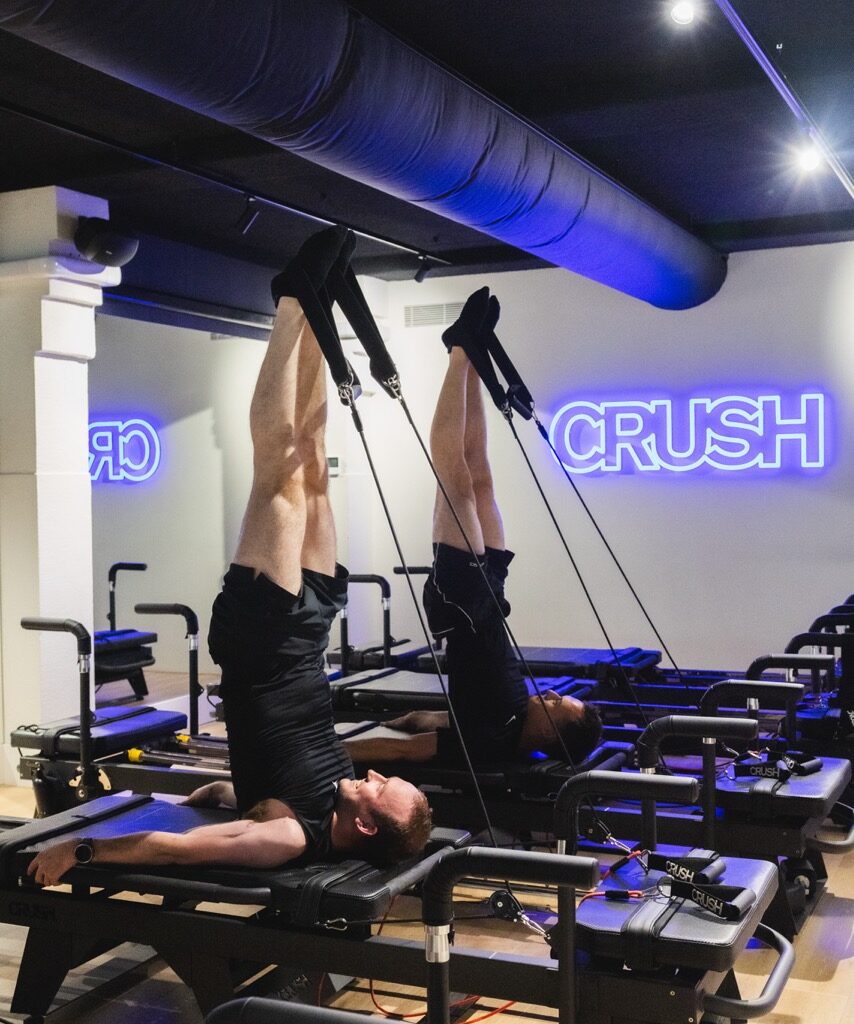
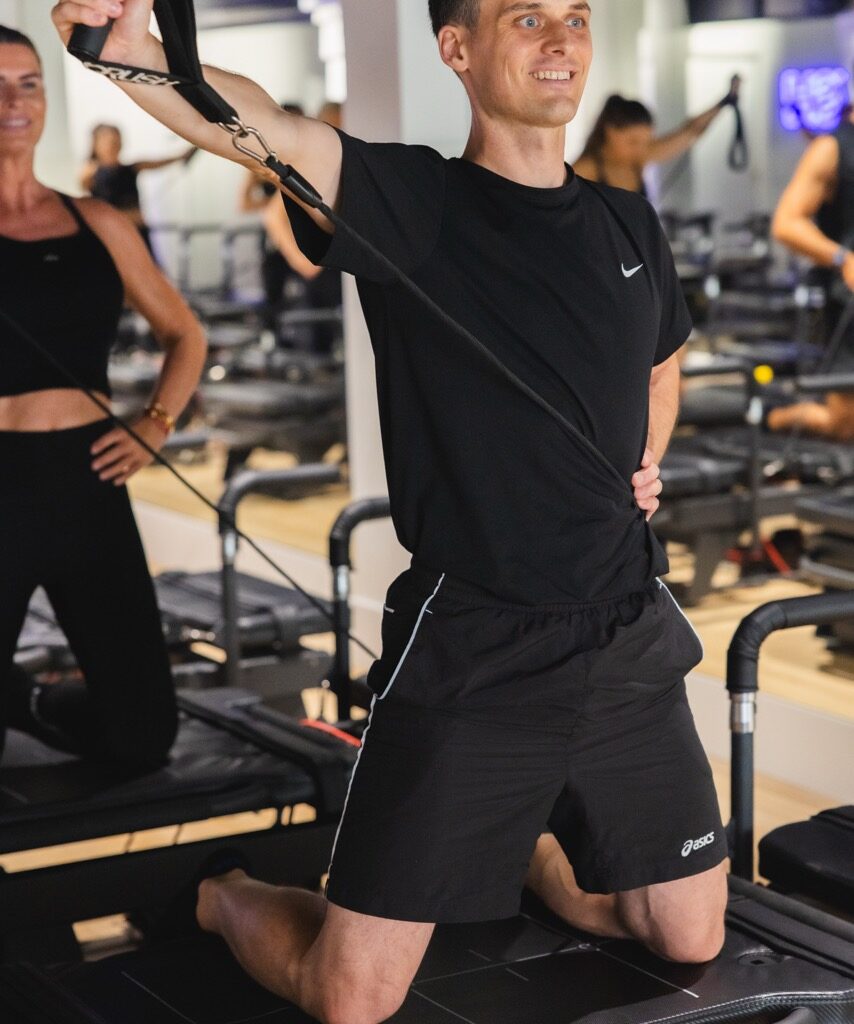
At CRUSH, the reformer is not just a machine. It is resistance, rhythm and precision in one 50-minute session. Springs keep your muscles working. The carriage asks for control. Your core has to stay present from the first move to the last.

Low-impact for your joints. High-intensity for your muscles. Full-body from start to finish.

What makes reformer pilates full-body?

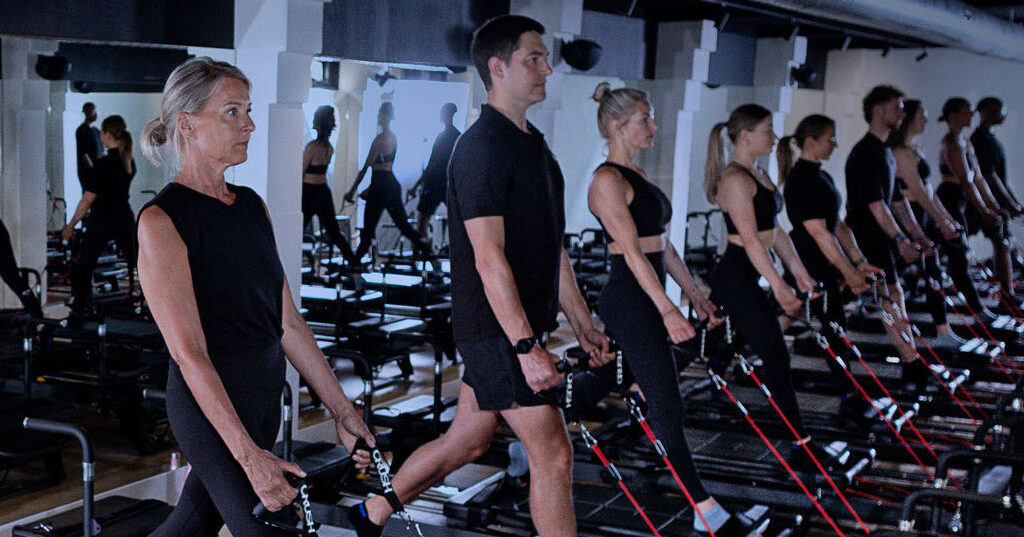
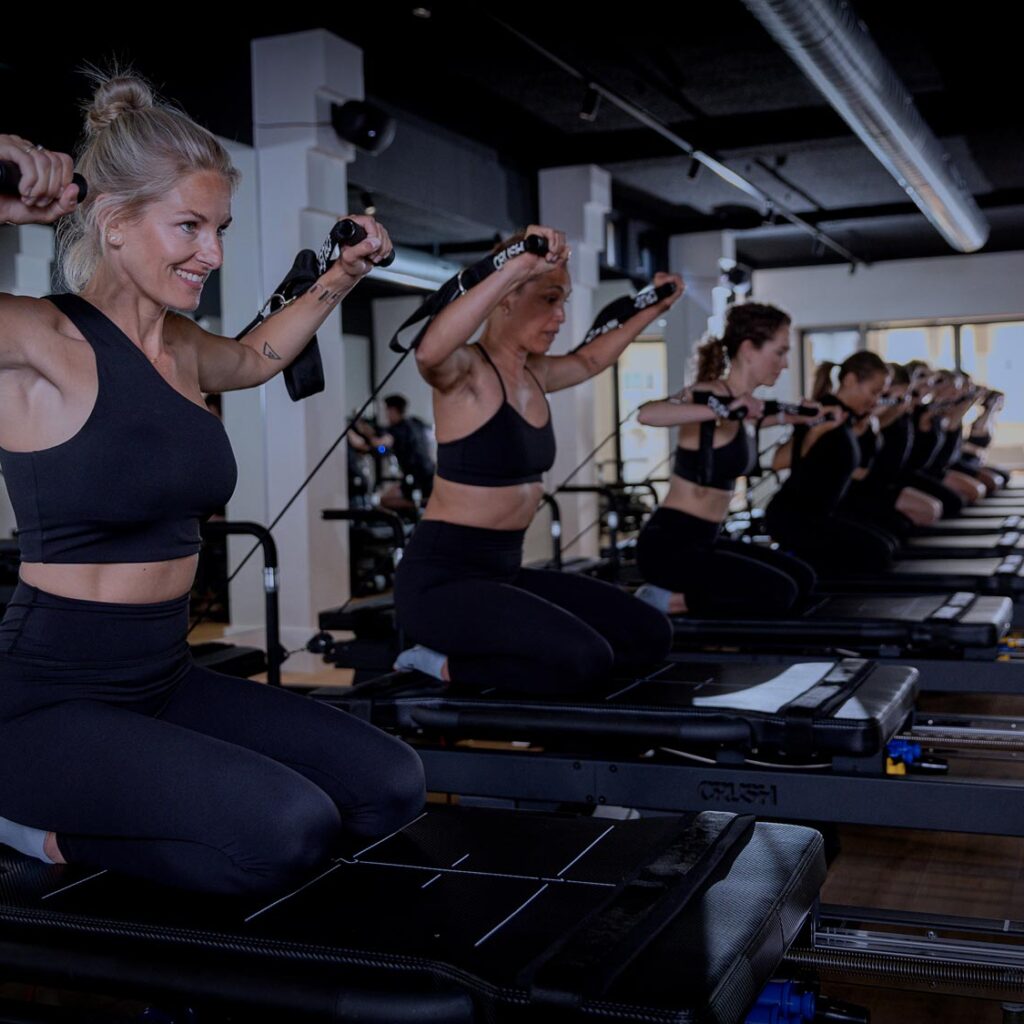
Reformer pilates works through spring-loaded resistance. Instead of lifting heavy weights or jumping through high-impact movements, you push, pull, press, hold and control the carriage against tension.

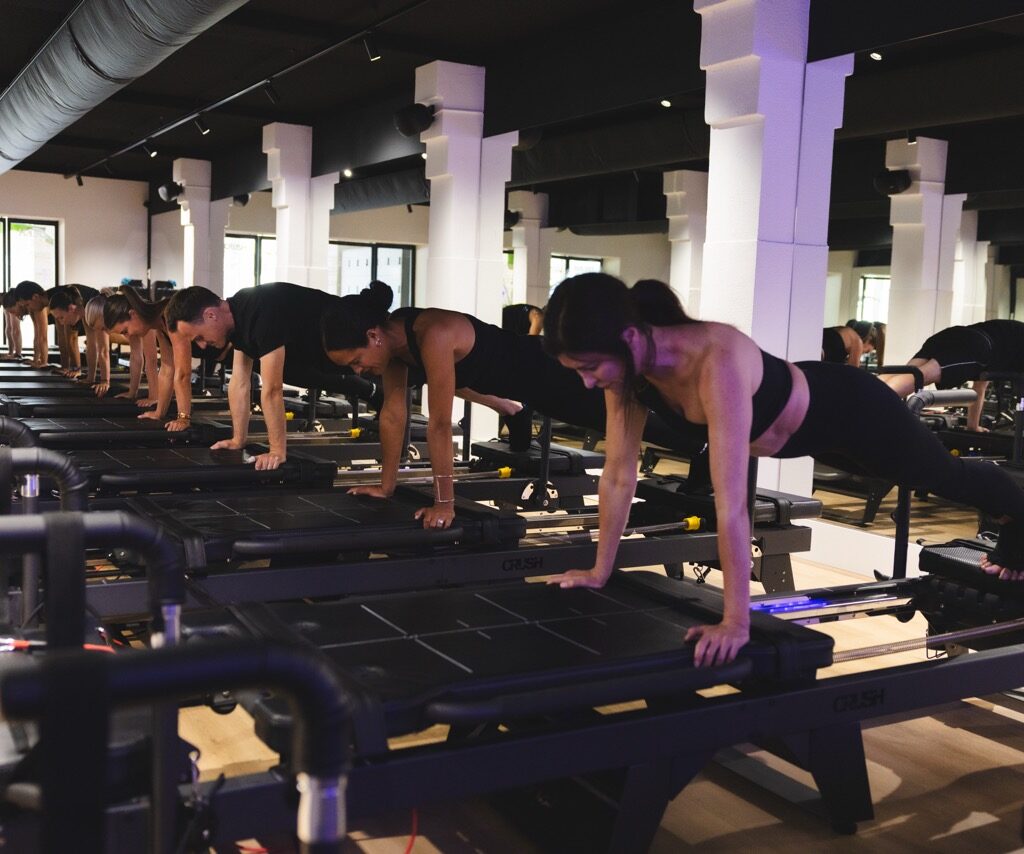
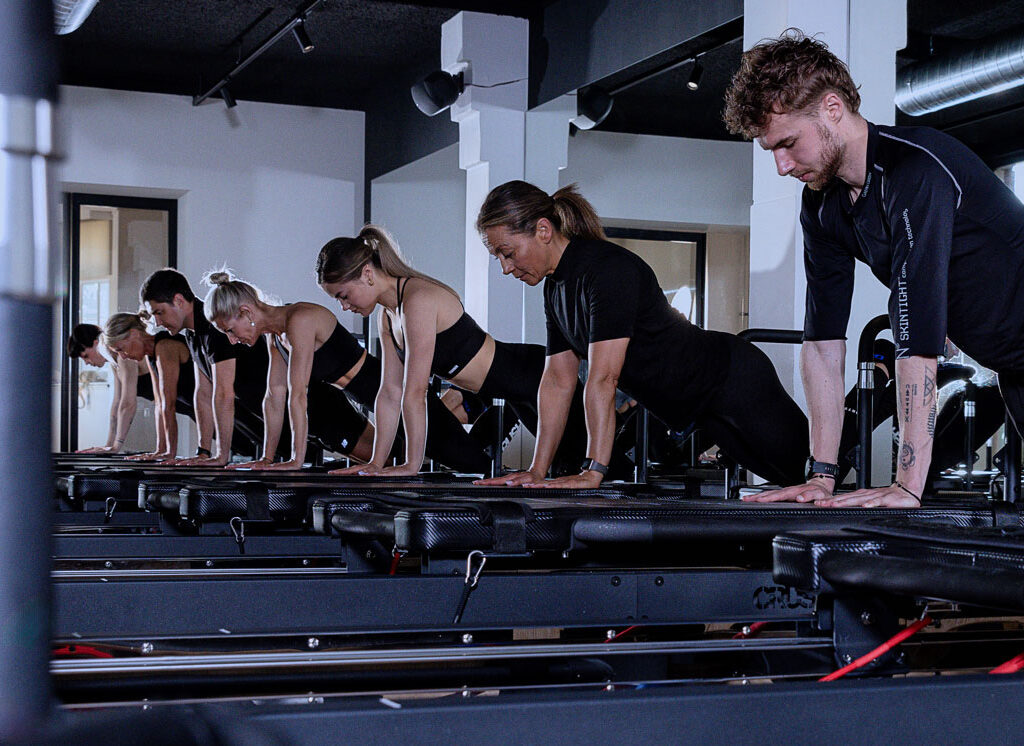
That tension does not only target one muscle at a time. A leg sequence asks your core to stabilise. An arm sequence asks your posture to stay lifted. A plank asks your shoulders, glutes, legs and deep core to work together.

This is why reformer pilates feels different from a standard gym workout. Your body cannot switch off. Every movement asks for focus.

It trains strength without the heavy impact

The reformer gives you resistance without the pounding. That makes it a strong option if you want a serious workout that still feels controlled and joint-aware.

You are not jumping. You are not throwing weights around. You are moving against springs with precision. The work is smooth, but the burn is real.

If you want to go deeper into the mechanics, read The Science Behind the Reformer: Why Springs Beat Weights. It explains why spring resistance can challenge your muscles through the full range of movement.

Your core works in almost every exercise

A strong reformer class is not just “abs at the end”. Your core is active throughout the session. It helps you control the carriage, hold alignment, move with stability and keep your body connected.

That deep core work is one of the reasons reformer pilates can leave you feeling taller and more centred. You are not only training visible muscles. You are training the stabilisers that support how you stand, sit, walk, run and move through the day.

It builds posture and body awareness

Reformer pilates makes you pay attention. Where are your ribs? Are your shoulders lifting? Is your pelvis stable? Are you moving with control or momentum?

Those small cues matter. Over time, they help you understand how your body moves and where it compensates. You learn to move with more precision, which can carry into everything else you do.

This is especially valuable if you spend long hours at a desk, play sports, run, cycle or train in the gym. Reformer work helps strengthen the muscles that keep you balanced, lifted and connected.

It supports other sports and workouts

Reformer pilates is not only for people who “do pilates”. It is a strong complement to running, cycling, tennis, strength training and team sports because it builds control in the places other workouts often miss.

Runners need hip stability. Cyclists need posture and core control. Strength training benefits from better alignment and range of motion. Reformer pilates brings all of that into one controlled, focused session.

For more on this angle, read How Pilates Improves Your Performance in Other Sports.

It is beginner-friendly and still seriously challenging

You do not need to be strong, flexible or experienced to start reformer pilates. Your instructor guides you through the setup, the springs and the movement patterns step by step.

At the same time, the reformer grows with you. A small adjustment in tempo, spring tension, range or position can make a movement much more intense. That is why reformer pilates works for beginners and experienced movers in the same studio.

Every body, every level. Your pace. Your next level.

Reformer pilates vs mat pilates: why the machine matters

Mat pilates uses your body weight, gravity and control. Reformer pilates adds springs, straps, the carriage and a moving surface. That means your body has to stabilise while managing resistance.

The machine gives you support where you need it and challenge where you least expect it. It can help you find better alignment, deeper activation and more feedback from every rep.

If you are new to the method, start with What Is Reformer Pilates? for a simple breakdown of how the reformer works.

What to expect in a CRUSH reformer class

Expect a 50-minute class built around controlled intensity. You will move through sequences for legs, glutes, core, arms and posture muscles, with spring-loaded resistance keeping your body engaged.

The lights are low. The music is high. Your instructor keeps you moving with clear cues and strong energy. You control the pace, but the class will ask you to stay with the burn.

If you want to compare formats before booking, explore the full CRUSH classes overview.

Why reformer pilates works so well as a weekly workout

Reformer pilates is effective because it is repeatable. You can build it into your weekly rhythm without the same joint stress as many high-impact workouts. You can progress gradually, feel your body getting stronger and keep refining your control.

It is not about chasing exhaustion. It is about training with precision so the results show up in how you move, stand and feel.

Small adjustments. Big difference.

Ready to try reformer pilates?

If you want a full-body workout that strengthens your core, challenges your muscles and leaves you more aware of your body, reformer pilates is a powerful place to start.

Book your next CRUSH Reformer class, or view the CRUSH schedule to find a session that fits your week.

FAQ

Is reformer pilates a full-body workout?

Yes. Reformer pilates works your legs, glutes, core, arms, shoulders and posture muscles through controlled spring-loaded resistance.

Is reformer pilates good for beginners?

Yes. You do not need experience to start. Your instructor guides the setup, springs and movements step by step.

Is reformer pilates low-impact?

Yes. Reformer pilates is low-impact for your joints while still being high-intensity for your muscles.

How often should I do reformer pilates?

Start with one class and build from there. Many people like adding reformer pilates into their weekly rhythm alongside barre, strength training, running or other movement.

Reformer Pilates group class at Crush Studios Haarlem

Best Pilates Studios Around Haarlem

Best Pilates Studios Around Haarlem

Looking for the best pilates studio around Haarlem is not just about finding the closest class on the map. It is about finding the place where your body is challenged, your joints are protected and the energy in the room makes you want to come back.

Because the right studio changes the way you train.

You show up for 50 minutes. You move with control. You feel the burn in muscles you did not know you were missing. You leave stronger, taller and more aware of how your body works.

That is the standard worth looking for.

What Makes a Pilates Studio Worth Your Time?

A strong pilates studio should do more than offer a mat, a machine and a schedule. It should give you a clear method, expert guidance and a class experience that keeps you consistent.

Around Haarlem, the best choice is usually not the loudest or the biggest. It is the studio that helps you train with precision, intensity and confidence.

Look for these five things before you book.

1. A Method That Challenges Your Whole Body

Pilates is not just stretching. And reformer pilates is definitely not a slow, easy class.

On the reformer, spring-loaded resistance keeps your muscles working through the entire movement. You push, pull, stabilise and control. There is no moment to switch off. That is why a good reformer class can feel low-impact and seriously intense at the same time.

At CRUSH Studios, the High Intensity Reformer class is built around that balance. You train your core, legs, glutes, arms, shoulders and stabilising muscles in one full-body session. The pace is strong, the movements are controlled and the music carries you through when the shake starts.

Low-impact for your joints. High-intensity for your muscles.

2. Instructors Who Guide Without Holding You Back

The best pilates instructors do more than count reps. They help you understand where the movement should come from, how to adjust your resistance and when to push a little further.

That matters whether it is your first class or your fiftieth.

If you are new to reformer pilates, you need clear guidance and a safe setup. If you already know the basics, you need flow, challenge and progression. A strong studio knows how to serve both without making beginners feel lost or experienced members feel slowed down.

At CRUSH, every class is guided step by step. You control your own spring resistance and pace, while the instructor keeps the room moving with focus and energy.

3. Classes That Fit Different Bodies and Goals

The best pilates studio around Haarlem should not force every body into the same format. Your training goals can change from week to week.

Some days you want deep core work and full-body resistance. Some days you want targeted sculpting, posture work or the graceful burn of barre. A balanced studio gives you options without losing its signature method.

CRUSH offers:

  • High Intensity Reformer for full-body strength, stability and deep core work.
  • Advanced High Intensity Reformer for experienced members ready for more flow, resistance and complexity.
  • CRUSH Barre for small, controlled movements with a big impact.
  • Booty Barre for focused glute, hamstring and hip work.
  • Ballet Barre for strength, balance, coordination and dance-inspired precision.

Every format has its own focus. All of them bring the same CRUSH energy.

4. A Studio Atmosphere That Keeps You Coming Back

Consistency wins. Always.

One great class can make you feel good for a day. A routine you actually want to keep builds strength, posture, confidence and results you can feel. That is why atmosphere matters.

The best studio is not just where you train. It is where you want to return when work is busy, motivation is low or your body needs a reset.

At CRUSH Studios in Haarlem, the lights go low and the music goes high. The room is focused, energetic and welcoming. You come for the workout, but you stay for the feeling.

That feeling is what turns a class into a habit.

5. A Location That Makes Showing Up Easy

The best pilates routine is the one you can actually keep.

If you live, work or study around Haarlem, choose a studio that fits naturally into your week. CRUSH Studios is located at Zijlweg 1 in Haarlem, close to the city centre and easy to reach from nearby neighbourhoods and surrounding towns.

That matters more than people think. When your class is easy to book, easy to reach and worth the effort every time, consistency becomes much easier.

Reformer or Barre: Which Should You Try First?

If you are new to CRUSH, start with the class that matches what your body is asking for.

Choose reformer if you want a full-body workout with spring resistance, deep core activation and strength that carries into daily life. It is ideal if you want low-impact training that still feels challenging from the first minute to the last.

Choose barre if you love small, precise movements that sculpt, tone and burn in all the right places. Barre is especially strong for glutes, legs, posture, balance and body awareness.

The best answer is often both. Reformer builds deep strength and stability. Barre adds targeted endurance, precision and flow. Together, they create a balanced routine that keeps your body progressing.

Why CRUSH Belongs on Your Shortlist

If you are searching for the best pilates studio around Haarlem, you are probably looking for more than a class. You are looking for a place that feels serious, motivating and safe. A place where beginners are welcome, experienced movers are challenged and every session has a clear purpose.

That is CRUSH.

In 50 minutes, you train with resistance, rhythm and control. You feel your muscles switch on. You build strength without unnecessary impact. You leave with that unmistakable post-class feeling: tired in the best way, lighter in your posture and ready to book the next one.

Every body, every level. Just bring your focus and willingness to show up.

Ready to Feel the Difference?

The best way to choose a pilates studio is simple: step into the room and feel it for yourself.

Check the CRUSH schedule, choose your first class and experience boutique reformer and barre training in Haarlem.

Book your session. Feel the burn. Come back stronger.

IMG_4500CRUSH_1000px

Pilates Near Heemstede: Boutique Reformer Classes Close By

Pilates Near Heemstede: Boutique Reformer Classes Close By

If you are looking for pilates near Heemstede, you do not need to travel far for a class that feels focused, challenging and worth the effort.

CRUSH Studios is close by in Haarlem, built for people who want more from their workout than a basic stretch or a standard gym session. Here, the lights go low, the music goes high and every class is designed to make your body work with precision.

Low-impact. High-intensity. Full-body burn.

Why Heemstede Moves Well With CRUSH

The best workout is the one you can keep showing up for. That means the location matters, but so does the feeling once you arrive.

From Heemstede, CRUSH Studios in Haarlem is close enough to make pilates part of your weekly rhythm. Before work, after work, between busy days or as your weekend reset, the studio gives you a clear place to train with energy and intention.

You come in, step onto the reformer or take your place at the barre, and for 50 minutes the focus is simple: move better, get stronger and feel the difference in your body.

What Is Boutique Reformer Pilates?

Boutique reformer pilates is not just pilates on a machine. It is a full-body training method built around spring-loaded resistance, controlled movement and expert instruction.

The reformer uses a sliding carriage, straps and adjustable springs to create resistance throughout every exercise. Your muscles work on the way out and on the way back in. That constant tension is what makes the class so effective.

At CRUSH, the reformer experience is high-energy and music-driven. You are guided through a 50-minute session that challenges your deep core, glutes, legs, arms, shoulders and stabilising muscles. The movements are controlled, but the burn is real.

No jumping. No heavy impact. No wasted minutes.

Low-Impact Does Not Mean Easy

One of the biggest misconceptions about reformer pilates is that low-impact means low-intensity.

It does not.

Low-impact means your joints are protected from the stress of jumping, running or heavy loading. High-intensity means your muscles still work hard. On the CRUSH reformer, the springs keep your body under tension, while the moving carriage challenges your balance and stability.

That combination is what makes reformer pilates so powerful for people near Heemstede who want to train smarter. You can build strength, improve posture and sculpt your body without the wear and tear of high-impact training.

Who Is Reformer Pilates For?

Reformer pilates is for every body, every level.

If you are new to pilates, your instructor guides you step by step. You do not need to be flexible, strong or coordinated to start. The reformer adapts to your level, and you control your own resistance and pace.

If you already train regularly, the reformer gives you something your usual routine may be missing: deep stabilising strength, core control, mobility and precision. Runners, cyclists, gym-goers and athletes often feel the difference quickly because reformer work targets the muscles that repetitive training can overlook.

If you sit a lot, carry stress in your shoulders or feel stiffness through your hips and back, reformer pilates can help you reconnect with how your body moves. You leave feeling worked, but not worn down.

More Than Reformer: Barre Close to Heemstede

CRUSH is also home to barre classes for anyone who wants to sculpt, tone and strengthen through small, precise movements.

Barre takes inspiration from ballet, pilates and functional strength training. You work at the barre and on the mat, using controlled holds, pulses and transitions that light up your legs, glutes, core and posture muscles.

It looks graceful from the outside. Inside the class, the burn arrives fast.

At CRUSH, you can choose from several barre formats:

  • CRUSH Barre for a complete, dynamic barre workout.
  • Booty Barre for focused glute, hamstring and hip work.
  • Ballet Barre for balance, coordination, flexibility and dance-inspired strength.

You do not need dance experience. You just need the willingness to move with control and stay with the shake.

How to Choose Your First Class

If you are coming from Heemstede and booking your first CRUSH class, start with your goal.

Choose High Intensity Reformer if you want a full-body class that builds strength, deep core control and stability. This is the signature CRUSH workout and a strong starting point for most people.

Choose CRUSH Barre if you want a class that blends pilates precision, strength training and the flow of dance. It is targeted, energetic and accessible.

Choose Booty Barre if your focus is glutes, hamstrings and hips.

Choose Ballet Barre if you want elegance, balance and strength in one class.

Once you know the basics, you can mix formats. Reformer and barre work beautifully together: one builds deep strength and stability, the other adds sculpting, endurance and precision.

What to Expect at CRUSH Studios

Expect a boutique studio atmosphere with serious energy.

The room is focused. The music is high. The instructor guides every movement, but you stay in control of your own body and resistance. You will feel your muscles shake, your core switch on and your posture sharpen as the class builds.

Every class lasts 50 minutes, which is enough time to challenge your whole body without taking over your day.

Wear comfortable sports clothing that lets you move freely. Grip socks are required for reformer and barre classes, and you can check with the studio if you need a pair. Bring water. CRUSH brings the burn.

Why Close By Matters

When you are searching for pilates near Heemstede, convenience is part of the decision. But convenience alone is not enough.

You want a studio close enough to fit your life and strong enough to change how your body feels. That is the sweet spot.

CRUSH Studios gives you both: a Haarlem location close to Heemstede and a training method built around intensity, control and results you feel beyond the studio.

Because consistency is where the transformation happens. One class starts the signal. A regular rhythm builds the habit. Week after week, your body gets stronger, more stable and more capable.

Book Pilates Near Heemstede

If you live in or around Heemstede and want boutique reformer or barre classes close by, CRUSH Studios is ready when you are.

Check the schedule, choose your class and step into 50 minutes of focused movement.

Book your session. Feel the burn. Leave stronger.

Reformer Pilates group class at Crush Studios Haarlem

Pilates and sport performance: what runners and cyclists gain from the reformer

You train hard. You log the kilometres, track your splits and push through the sessions when motivation is low. Whether you run or cycle, you are committed. But no matter how consistent you are with your main sport, there is a good chance your body is quietly working against you. Tightness in the hips. Weakness in the glutes. A core that switches off the moment fatigue sets in. These are not signs of poor fitness. They are the predictable result of repetitive, single-plane training. And they are exactly what reformer pilates at CRUSH Studios is built to fix. 


The hidden cost of repetitive sport 

Running and cycling are both linear sports. Every stride, every pedal stroke moves you forward in the same plane of motion, recruiting the same muscles in the same pattern, again and again. That repetition is what makes you efficient at your sport. It is also what creates the imbalances that hold you back. 

Runners typically develop tight hip flexors, weak glutes and poor lateral stability. The knees track inward, the pelvis drops with every stride and the lower back starts absorbing forces it was never designed to handle. The result is slower times, reduced efficiency and eventually injury. 

Cyclists face a different but equally predictable set of problems. Hours in a flexed, forward-leaning position shortens the hip flexors, rounds the upper back and creates chronic tightness in the neck and shoulders. Off the bike, the body struggles to fully extend. Power transfer suffers and the risk of overuse injury climbs. 

Reformer pilates does not replace your sport. It corrects the imbalances your sport creates. Read our blog about how pilates improves your performance in other sports for a broader look at how this works across different disciplines. 


What the reformer does for runners 

Core strength that holds under fatigue 

A strong core is not about a flat stomach. It is about the deep stabilising muscles that keep your pelvis level, your spine neutral and your running form intact when your legs are screaming at kilometre thirty. These are the muscles the reformer is specifically designed to activate. 

At CRUSH, every reformer class builds this deep core stability through controlled, spring-loaded resistance. The sliding carriage constantly challenges your body to stabilise, recruiting the exact muscles that protect your spine and power your stride. 

Glute activation and hip stability 

Weak glutes are one of the leading causes of running injuries. When the glutes do not fire properly, the knees collapse inward, the IT band tightens and the lower back overloads. The reformer targets the glutes and hip stabilisers in ways that running itself never does, building the strength that keeps your form together from the first kilometre to the last. 

Mobility without losing stability 

Tight hip flexors limit your stride length and force your lower back to compensate. The reformer opens the hips through full, controlled range of motion while simultaneously building the strength to support that mobility. You become more flexible and more stable at the same time, which is exactly what efficient running requires. 

“I started CRUSH alongside my marathon training and noticed the difference within three weeks. My hips felt more open, my posture improved and I stopped getting that familiar tightness in my left knee. I wish I had started years ago.” — CRUSH member, marathon runner 


What the reformer does for cyclists 

Counteracting the cycling position 

The cycling position is the enemy of good posture. Hours of forward flexion tightens the chest, weakens the upper back and shortens everything at the front of the body. Reformer pilates directly counters these patterns by opening the chest, strengthening the posterior chain and restoring the body’s ability to fully extend. 

The result is less pain on and off the bike, better breathing capacity and a more powerful, efficient position in the saddle. 

Power transfer through a stable core 

Every watt you produce on the bike has to travel through your core before it reaches the pedals. A weak or unstable core is a leaky pipe. Energy gets lost in compensatory movements instead of going where it needs to go. Strengthening the deep core through reformer pilates means more of the power your legs generate actually reaches the road. 

Injury prevention for the long season 

Cyclist’s knee, lower back pain and neck strain are among the most common complaints in the sport. All of them are linked to the imbalances and postural patterns that cycling creates over time. Regular reformer pilates addresses the root causes rather than the symptoms, keeping you on the bike and out of the physio’s office. 

“As a cyclist I was always dealing with lower back issues after long rides. Two months of CRUSH classes completely changed that. My back is stronger, my position on the bike feels more natural and my power numbers have actually improved.” — CRUSH member, competitive cyclist 


Why CRUSH works for athletes 

The CRUSH method is low-impact but high-intensity, which makes it the perfect complement to the high training loads that runners and cyclists already carry. You get a genuine workout that drives real adaptation without adding stress to joints and tissues that are already under pressure from your sport. 

The spring resistance of the reformer creates constant tension throughout every movement, activating more muscle fibres in less time than conventional gym training. The instability of the carriage recruits the deep stabilising muscles that sport-specific training misses. And the full-body nature of each 50-minute class means no muscle group gets left behind. 

Want to understand more about the science behind this? Read our blog on why springs beat weights for a deeper dive into how the reformer creates results that conventional training cannot. 


How to fit CRUSH into your training week 

Two CRUSH sessions per week alongside your regular sport training is the sweet spot for most athletes. Use them on lighter training days or as active recovery after hard sessions. The low-impact nature of the reformer means you can train at CRUSH without compromising your running or cycling performance. 

Consistency is what makes the difference. Read our blog about why consistency is more important than intensity to understand why two regular sessions will always outperform sporadic effort. 

Check the CRUSH schedule and find slots that work around your training. New to CRUSH? Start with our intro packages and experience the difference the reformer makes in your very first session. 

Burn. Shake. Smile. CRUSH. 

Reformer Pilates group class at Crush Studios Haarlem

The science behind the reformer: why springs beat weights

Walk into any conventional gym and you will find the same equipment that has been there for decades. Barbells, dumbbells, cable machines, treadmills. They work, to a degree. But there is a reason elite athletes, physiotherapists and movement specialists around the world have turned to the reformer as one of the most effective training tools available. The science behind it is compelling, and once you understand it, the results you feel at CRUSH Studios start to make a lot more sense. 


How conventional weights work 

When you lift a dumbbell or push a barbell, you are working against gravity. The resistance is fixed, the direction is always downward and momentum plays a significant role. At the top of a bicep curl, for example, your muscle is barely working because gravity is no longer pulling the weight away from you. At the bottom, momentum from the swing does much of the work for you. 

This means that with conventional weights, your muscles are only truly challenged at certain points in the range of motion. The rest of the movement is partially wasted. For building bulk, this can still be effective. For building functional strength, stability and the kind of deep muscle activation that changes how your body moves and feels, it falls short. 


How the reformer works differently 

The reformer uses a system of springs to create resistance. Those springs behave very differently from gravity. Spring resistance increases as the spring stretches, which means the further you move into a position, the more resistance you feel. But more importantly, the springs create resistance in multiple directions, not just downward. 

Constant tension throughout the movement 

Because the springs are always pulling or pushing against your movement, your muscles are engaged throughout the entire range of motion. There is no resting point, no moment where momentum takes over. Every millimetre of every exercise requires muscular effort. This is called constant tension training, and it is one of the most efficient ways to build strength and muscle tone. 

At CRUSH, this principle is built into every exercise in the High Intensity Reformer class. Whether you are pushing the carriage away or controlling it back, your muscles are working. The result is more total muscle activation in less time. 

Eccentric loading 

One of the most valuable aspects of spring resistance is what happens on the return phase of a movement. When you push the carriage out and then control it back, the springs are pulling it back toward the starting position. Your muscles have to resist that pull, working eccentrically to slow and control the movement. 

Eccentric muscle contractions are where a significant portion of strength and muscle development happens. Research consistently shows that eccentric loading produces greater strength gains and more muscle fibre recruitment than concentric loading alone. With conventional weights, you can choose to let gravity do the work on the return. With the reformer springs, you cannot. The resistance is always there, in both directions. 

Multi-directional resistance 

Gravity only pulls in one direction: down. The springs of the reformer can be configured to pull from the front, the back or at an angle, depending on how the exercise is set up. This allows the reformer to challenge muscles in planes of movement that free weights simply cannot replicate. Rotational strength, lateral stability and diagonal movement patterns are all trainable on the reformer in ways that transfer directly to real-life movement and sport. 


The instability factor 

Beyond the springs, the sliding carriage of the reformer introduces an element of instability that is absent from most gym equipment. Every time you push or pull the carriage, your body has to stabilise against the movement. This recruits the deep stabilising muscles of the core, hips and shoulders that conventional training rarely reaches. 

These are the muscles that hold your body together during complex movements. They protect your joints, maintain your posture and make everything else you do more efficient. Strengthening them through reformer training does not just make you better at pilates. It makes you better at everything. Read our blog about how pilates improves your performance in other sports to see exactly how this translates outside the studio. 


Why low-impact does not mean low-intensity 

One of the most common misconceptions about the reformer is that because it is gentle on the joints, it must be easy. The opposite is true. Because the springs create constant tension and the carriage demands constant stabilisation, the muscular effort required in a CRUSH class is genuinely high. Your heart rate rises, your muscles fatigue and you leave the studio having done serious work. 

The difference is that this intensity is achieved without the joint stress that comes from heavy lifting or high-impact cardio. No compression on the knees, no shear force on the spine, no impact on the ankles. The reformer delivers intensity through resistance and control rather than through load and impact. This is why it is suitable for rehabilitation, for beginners and for elite athletes at the same time. 

Want to understand this principle in more depth? Our blog about why low-impact high-intensity training is so effective breaks it down further. 


The CRUSH reformer: built for results 

At CRUSH we work with a custom-designed reformer specifically built for the CRUSH method. Every class is structured to maximise the benefits of spring resistance, from the sequencing of exercises to the spring settings used at each stage of the workout. Nothing is accidental. Everything is designed to get the most out of every minute you spend in the studio. 

Whether you are new to the reformer or have been training for years, the science works the same way. The springs create the stimulus, your body adapts and the results follow. All you have to do is show up consistently. Check the CRUSH schedule and book your next class, or explore our intro packages if you are ready to experience the reformer for the first time. 

Burn. Shake. Smile. CRUSH.