
Why Reformer Pilates Is the Perfect Full-Body Workout
You want a workout that does more than make you sweat. You want strength, control, posture, core stability and a body that feels switched on from head to toe. That is where reformer pilates earns its reputation.
At CRUSH, the reformer is not just a machine. It is resistance, rhythm and precision in one 50-minute session. Springs keep your muscles working. The carriage asks for control. Your core has to stay present from the first move to the last.
Low-impact for your joints. High-intensity for your muscles. Full-body from start to finish.
What makes reformer pilates full-body?
Reformer pilates works through spring-loaded resistance. Instead of lifting heavy weights or jumping through high-impact movements, you push, pull, press, hold and control the carriage against tension.
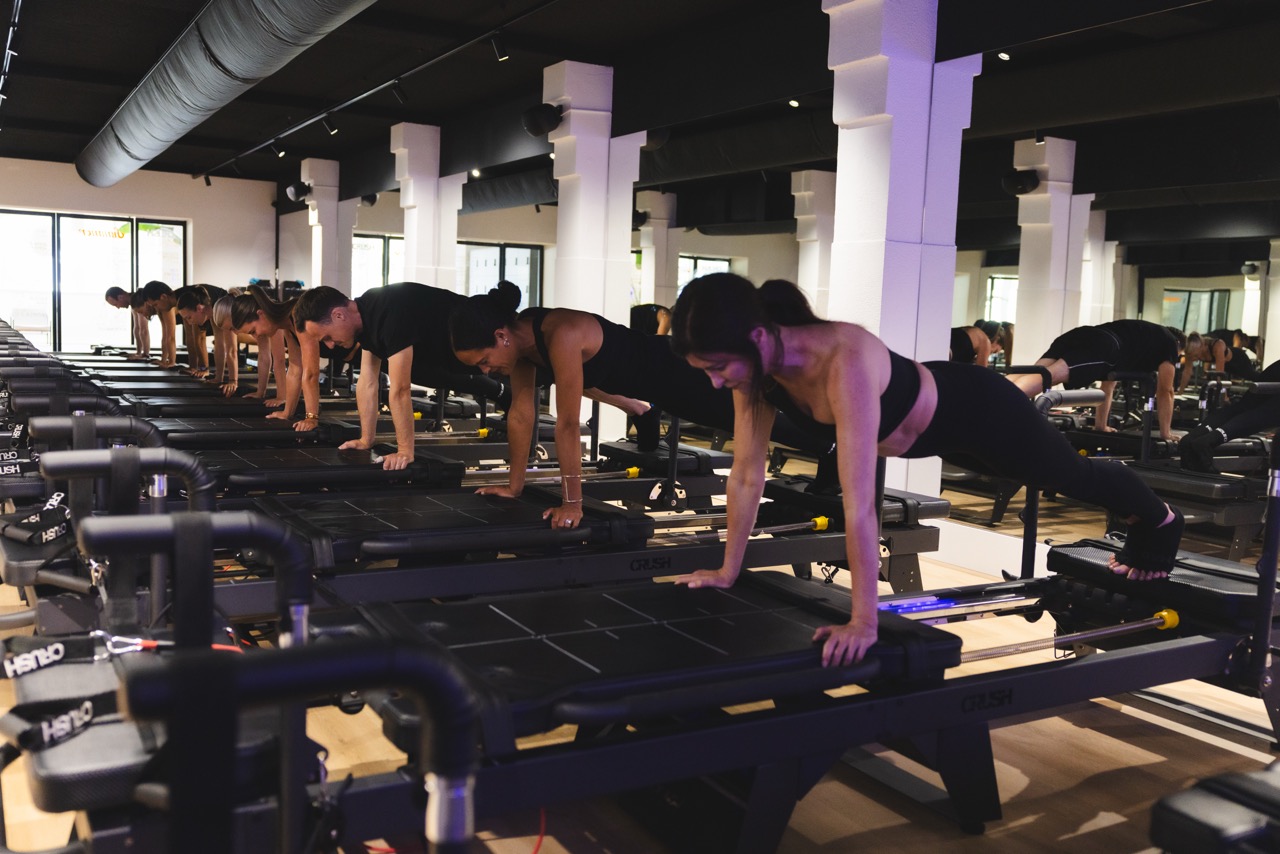
That tension does not only target one muscle at a time. A leg sequence asks your core to stabilise. An arm sequence asks your posture to stay lifted. A plank asks your shoulders, glutes, legs and deep core to work together.
This is why reformer pilates feels different from a standard gym workout. Your body cannot switch off. Every movement asks for focus.
It trains strength without the heavy impact
The reformer gives you resistance without the pounding. That makes it a strong option if you want a serious workout that still feels controlled and joint-aware.
You are not jumping. You are not throwing weights around. You are moving against springs with precision. The work is smooth, but the burn is real.
If you want to go deeper into the mechanics, read The Science Behind the Reformer: Why Springs Beat Weights. It explains why spring resistance can challenge your muscles through the full range of movement.
Your core works in almost every exercise
A strong reformer class is not just “abs at the end”. Your core is active throughout the session. It helps you control the carriage, hold alignment, move with stability and keep your body connected.
That deep core work is one of the reasons reformer pilates can leave you feeling taller and more centred. You are not only training visible muscles. You are training the stabilisers that support how you stand, sit, walk, run and move through the day.
It builds posture and body awareness
Reformer pilates makes you pay attention. Where are your ribs? Are your shoulders lifting? Is your pelvis stable? Are you moving with control or momentum?
Those small cues matter. Over time, they help you understand how your body moves and where it compensates. You learn to move with more precision, which can carry into everything else you do.
This is especially valuable if you spend long hours at a desk, play sports, run, cycle or train in the gym. Reformer work helps strengthen the muscles that keep you balanced, lifted and connected.
It supports other sports and workouts
Reformer pilates is not only for people who “do pilates”. It is a strong complement to running, cycling, tennis, strength training and team sports because it builds control in the places other workouts often miss.
Runners need hip stability. Cyclists need posture and core control. Strength training benefits from better alignment and range of motion. Reformer pilates brings all of that into one controlled, focused session.
For more on this angle, read How Pilates Improves Your Performance in Other Sports.
It is beginner-friendly and still seriously challenging
You do not need to be strong, flexible or experienced to start reformer pilates. Your instructor guides you through the setup, the springs and the movement patterns step by step.
At the same time, the reformer grows with you. A small adjustment in tempo, spring tension, range or position can make a movement much more intense. That is why reformer pilates works for beginners and experienced movers in the same studio.
Every body, every level. Your pace. Your next level.
Reformer pilates vs mat pilates: why the machine matters
Mat pilates uses your body weight, gravity and control. Reformer pilates adds springs, straps, the carriage and a moving surface. That means your body has to stabilise while managing resistance.
The machine gives you support where you need it and challenge where you least expect it. It can help you find better alignment, deeper activation and more feedback from every rep.
If you are new to the method, start with What Is Reformer Pilates? for a simple breakdown of how the reformer works.
What to expect in a CRUSH reformer class
Expect a 50-minute class built around controlled intensity. You will move through sequences for legs, glutes, core, arms and posture muscles, with spring-loaded resistance keeping your body engaged.
The lights are low. The music is high. Your instructor keeps you moving with clear cues and strong energy. You control the pace, but the class will ask you to stay with the burn.
If you want to compare formats before booking, explore the full CRUSH classes overview.
Why reformer pilates works so well as a weekly workout
Reformer pilates is effective because it is repeatable. You can build it into your weekly rhythm without the same joint stress as many high-impact workouts. You can progress gradually, feel your body getting stronger and keep refining your control.
It is not about chasing exhaustion. It is about training with precision so the results show up in how you move, stand and feel.
Small adjustments. Big difference.
Ready to try reformer pilates?
If you want a full-body workout that strengthens your core, challenges your muscles and leaves you more aware of your body, reformer pilates is a powerful place to start.
Book your next CRUSH Reformer class, or view the CRUSH schedule to find a session that fits your week.
FAQ
Is reformer pilates a full-body workout?
Yes. Reformer pilates works your legs, glutes, core, arms, shoulders and posture muscles through controlled spring-loaded resistance.
Is reformer pilates good for beginners?
Yes. You do not need experience to start. Your instructor guides the setup, springs and movements step by step.
Is reformer pilates low-impact?
Yes. Reformer pilates is low-impact for your joints while still being high-intensity for your muscles.
How often should I do reformer pilates?
Start with one class and build from there. Many people like adding reformer pilates into their weekly rhythm alongside barre, strength training, running or other movement.