You train hard. You run, cycle, swim or hit the gym regularly. You are consistent, you push yourself and you are always looking for ways to get better. But no matter how dedicated you are to your sport, there is a good chance your body has weak spots you are not even aware of. Imbalances, compensations and underused muscle groups that quietly limit your performance and increase your risk of injury.
This is where pilates comes in. And more specifically, this is where the reformer at CRUSH Studios in Haarlem comes in.
The missing piece in most training routines
Most sports are repetitive by nature. Running is a forward motion. Cycling keeps you in a fixed position for hours. Swimming relies on the same stroke patterns again and again. That repetition is what makes you good at your sport, but it is also what creates imbalances in your body over time.
Certain muscles get overused and tight. Others are underused and weak. Your body starts to compensate, shifting load to joints and muscles that were never meant to carry it. The result is reduced efficiency, slower times and eventually injury.
Reformer pilates addresses exactly these imbalances. By activating deep stabilising muscles, improving mobility and training your body to move in a more balanced and controlled way, pilates fills the gaps that sport-specific training leaves behind. Read our blog about why low-impact high-intensity training is so effective to understand why the reformer delivers results that conventional training cannot.
What pilates adds to specific sports
Running
Runners live and die by their core. A weak core means energy leaks with every stride, your hips drop, your knees collapse inward and your lower back absorbs forces it should never have to deal with. Reformer pilates builds the deep core strength that keeps your running form intact even when fatigue sets in. It also targets the hip flexors, glutes and stabilising muscles of the ankle and knee, reducing the risk of the most common running injuries like IT band syndrome, shin splints and runner’s knee.
Cycling
Cyclists spend hours in a flexed, forward-leaning position that shortens the hip flexors, rounds the upper back and puts enormous strain on the lower back and neck. Pilates counteracts these postural patterns by opening the chest, lengthening the hip flexors and strengthening the posterior chain. The result is less pain on and off the bike, better power transfer and improved endurance in the saddle.
Team sports and gym training
For those who play football, tennis or other team sports, pilates develops the rotational strength and lateral stability that most gym programmes neglect. Explosive movements in sport rely on a stable base, and that base starts in the deep muscles of the core and hips. Strengthening these through reformer pilates translates directly into faster reactions, more powerful movements and better injury resilience.
The role of the reformer in athletic development
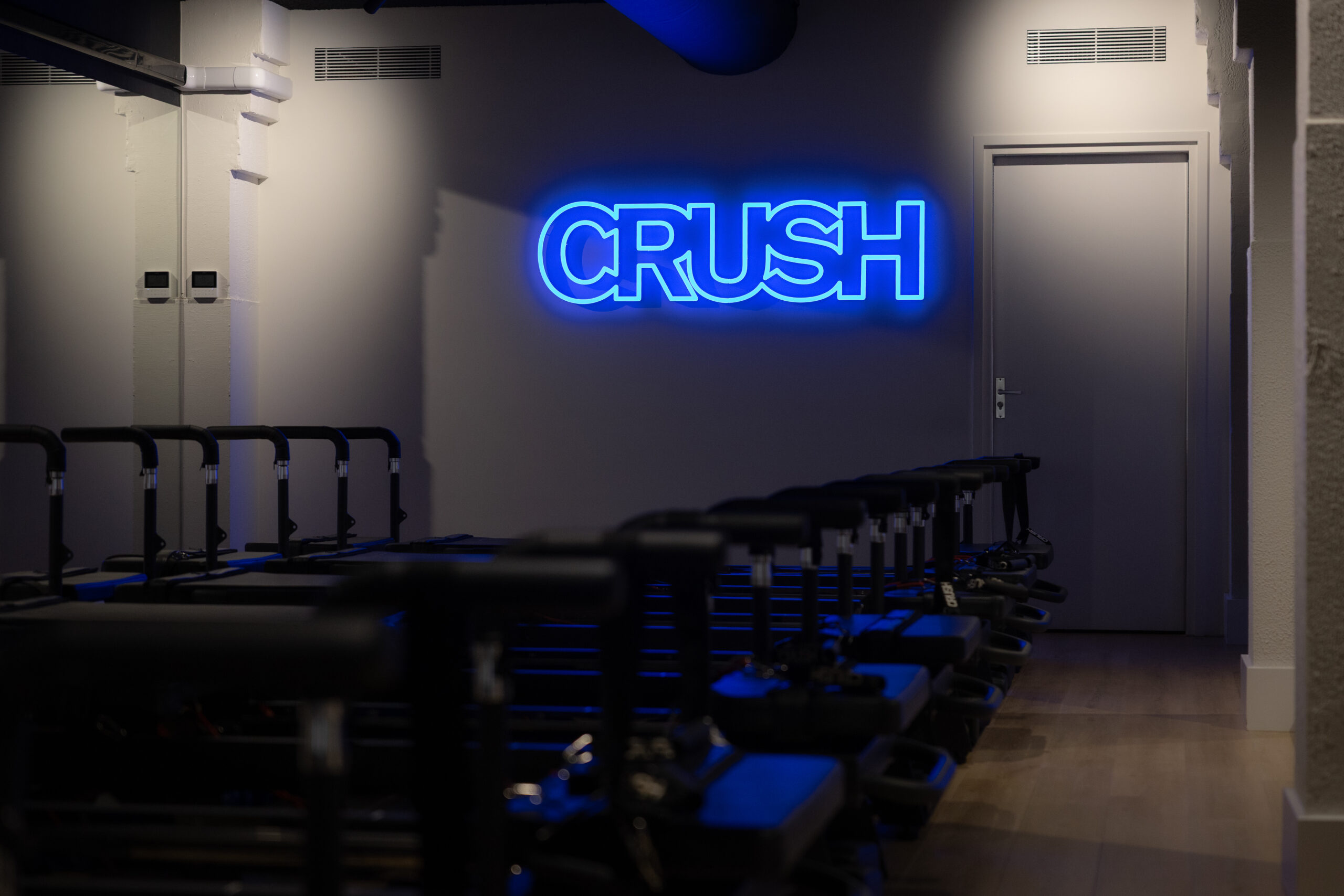
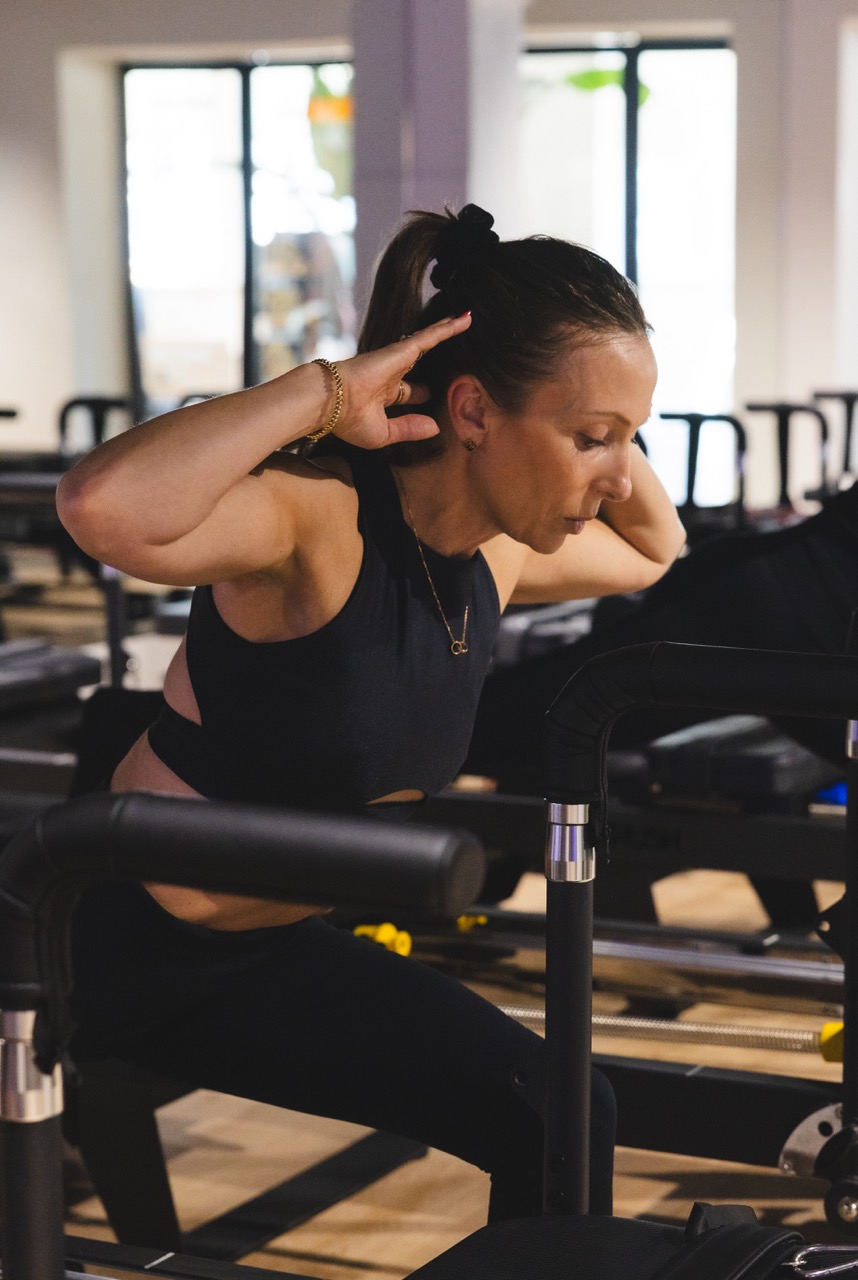
What makes the CRUSH reformer particularly valuable for athletes is the combination of resistance and instability. The spring system creates constant tension that challenges your muscles through their full range of motion, while the sliding carriage forces your body to stabilise in ways that mimic the demands of real athletic movement.
This is not passive stretching or gentle mobility work. A CRUSH High Intensity Reformer class is a genuine workout that will challenge even the most conditioned athletes. The difference is that it trains the body in a way that complements rather than competes with your existing sport. Low-impact enough to use as active recovery, intense enough to drive real adaptation.
Many athletes find that adding two CRUSH sessions per week alongside their regular training leads to noticeable improvements within a few weeks. Better posture, stronger core, less tightness and more fluid movement. And because the reformer is so different from what most athletes do in their regular training, it keeps the body guessing and prevents the plateau that comes from doing the same thing over and over.
Consistency is what makes the difference
Like any training method, pilates only works if you show up regularly. One session will leave you sore in muscles you did not know existed. Ten sessions will start to change how your body moves. Twenty sessions will change your performance in your sport in ways you can measure.
The key is building pilates into your weekly routine as a non-negotiable, just like your long run or your swim session. Check the CRUSH schedule and find two slots that work alongside your existing training. Our blog about why consistency is more important than intensity explains exactly why this regular commitment is what drives results.
Getting started at CRUSH
Never done pilates before? That is completely fine. The CRUSH classes are designed to be accessible for every fitness level, including athletes who are new to the reformer. Our instructors will guide you through the movements and help you find the right resistance for your level. Want to know more about who we are and what drives us? Read our story.
Start with our intro packages to experience the reformer without a big commitment and discover why so many athletes in Haarlem have made CRUSH a permanent part of their training.
Burn. Shake. Smile. CRUSH.